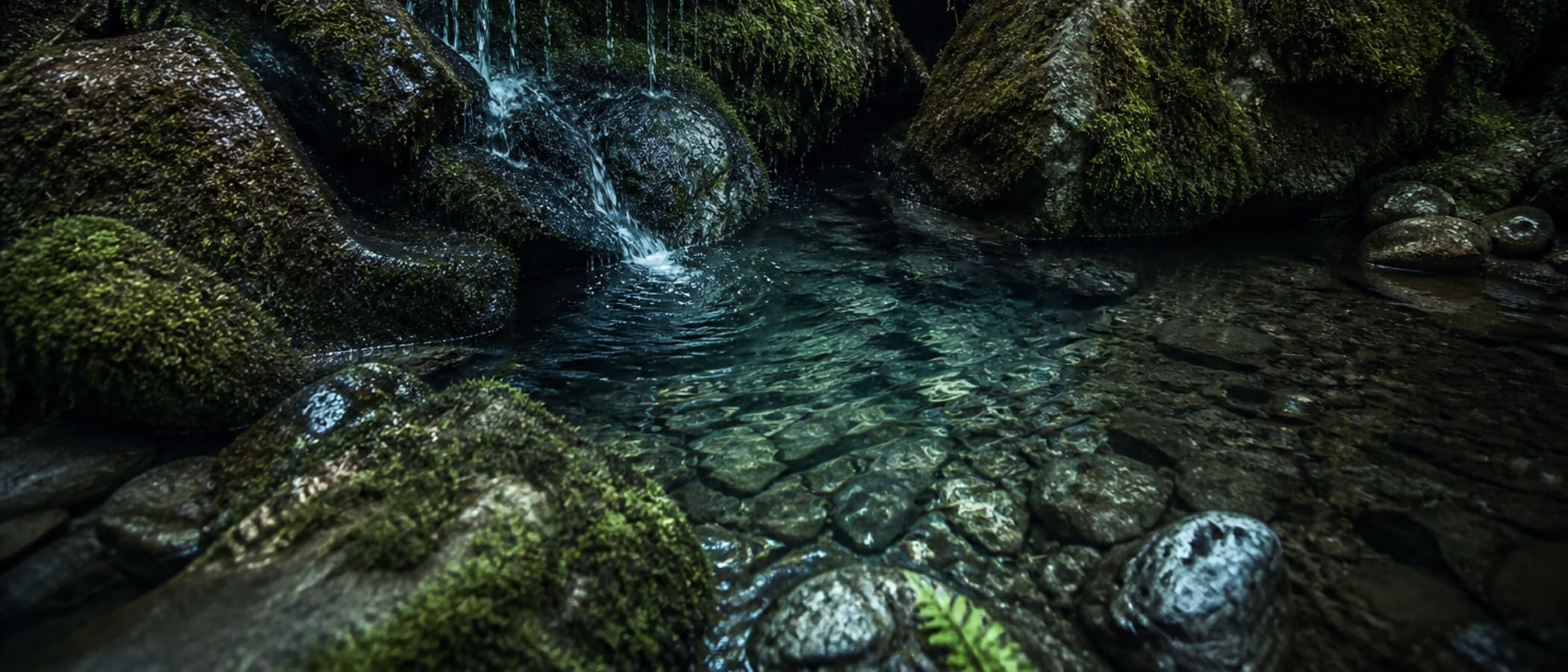
Clear spring water seeping from mossy stones into a forest pool

Skill pillar

Safe Water

You can survive days without food; without water, cognition and thermoregulation collapse fast. Safe water is not “any liquid”—it is volume you can trust after treatment.

2 Min. Lesezeit3 Methoden

Orientieren
Sicherheitshinweise anzeigen

Szenario

Arid scrub at midday; last sip three hours ago; dry wash visible downhill.

Bester erster Schritt:

Move in shade toward the lowest ground. Dig a seep in the outside bend of a dry wash before you burn energy on a solar still.

Warum es wichtig ist

In PSR scoring, water sits just behind shelter/fire in the Rule of Threes. The skill is locating sources, improvising containers, and applying heat or filtration without wasting irreplaceable fuel.

Wählen

Tippe eine Methode an, um sie zu lernen – eine nach der anderen.

Nach Region filtern

Tippe ein Biom an, um die Methoden nach Eignung neu zu sortieren. Alle Methoden bleiben für Leser und Suchmaschinen sichtbar.

Vergleich auf einen Blick

Lernen

Diese Methode lernen

Seep / dig for groundwater

Universal fieldcraft: dig in damp sand of dry riverbeds, above high-tide lines, or at the base of cliffs where vegetation signals moisture.

Auf einen Blick

EnergieaufwandMittlerer EnergieaufwandDigging costs sweat—ironic in desert. Dig in shade, rest often, and stop if sand stays bone-dry.
ZuverlässigkeitMittlere Zuverlässigkeit
Zeit30–90 minutes for a usable seep in promising ground

Materialien

  • Digging tool or stout stick
  • Cloth or improvised filter
  • Container (bladder, bottle, bamboo, bark vessel)

Schritte

  1. 1Identify likely moisture: green vegetation, animal tracks converging, cool sand in washes.
  2. 2Dig until water seeps; let sediment settle.
  3. 3Scoop carefully; filter through cloth into a clean container.
  4. 4Treat by boiling or other validated method before drinking.

Häufige Fehler

  • Digging on the inside bend or ridge tops where water never pools
  • Contaminating the hole with dirty hands or tools
  • Sweating out more water than you recover

Eignung je Region

Am besten in: Gemäßigter Wald, Tropischer Dschungel, Wüste, Gebirge, Küste & Sumpf · Schwach in: Schnee & Eis

  • Gemäßigter WaldGut geeignet
  • Tropischer DschungelGut geeignet
  • WüsteGut geeignet
  • GebirgeGut geeignet
  • Schnee & EisWenig geeignet
  • Küste & SumpfGut geeignet

Legende zur EignungGut geeignetWenig geeignetVermeiden

Weitere Methoden

Boiling Mittlerer Energieaufwand · Hohe Zuverlässigkeit

The gold-standard field treatment for pathogens when you can bring water to a rolling boil—ancient practice wherever fire and a vessel exist.

Materialien

  • Fire and fuel
  • Heat-safe vessel (metal, ceramic, rock-boiling in a pit with hot stones)
  • Settled or pre-filtered water

Schritte

  1. Pre-filter cloudy water through cloth.
  2. Bring to a rolling boil; maintain according to local guidance (typically one minute at moderate altitude; longer at high altitude).
  3. Cool covered; store sealed.

Energieaufwand

Mittlerer Energieaufwand. Fuel is the cost. In wet biomes, gathering dry fuel may exceed the boil itself.

Eignung je Region

Am besten in: Gemäßigter Wald, Tropischer Dschungel, Gebirge, Schnee & Eis, Küste & Sumpf · Schwach in: Wüste

Häufige Fehler

  • Vessel cracks or spills—lose both water and fuel
  • Assuming boil removes chemical pollution
  • Recontaminating with dirty lids or hands
Solar still Geringer Energieaufwand · Geringe Zuverlässigkeit

Transpiration and pit stills condense moisture using sun and plastic or large leaves—useful teaching tool; often low yield in true survival.

Materialien

  • Clear plastic sheet or broad non-toxic leaves
  • Container under the low point
  • Optional green vegetation in the pit

Schritte

  1. Dig a pit; place container in the centre.
  2. Add chopped green vegetation around the container if available.
  3. Seal with plastic; weight the centre so condensate drips into the cup.
  4. Wait through peak sun; collect sparingly.

Energieaufwand

Geringer Energieaufwand. Low muscle cost, high time cost. Rarely replaces a real seep or known spring.

Eignung je Region

Schwach in: Gemäßigter Wald, Tropischer Dschungel, Wüste, Gebirge, Küste & Sumpf · Vermeiden in: Schnee & Eis

Häufige Fehler

  • Expecting litres—yield is often tablespoons
  • Punctured seal or no temperature gradient
  • Using toxic plants inside the still
Bewerten

Kompetenzstufen

Ehrliche Selbsteinschätzung mit denselben Stufen wie im Rechner.

  1. Keine

    Cannot locate or treat field water; depends on bottled supply only.

  2. Grundlegend

    Can boil water in a proper pot over an established fire.

  3. Geübt

    Can find likely sources, improvise containers, and treat water in temperate terrain.

  4. Experte

    Reads terrain hydrology across biomes and manages fuel vs hydration trade-offs under stress.

Häufige Fragen

Is clear water safe?

No. Clarity does not mean pathogen-free. Treat whenever you can. Chemical pollution can look clean and still be dangerous—boiling will not fix that.

Should I drink urine or salt water?

No. Both worsen dehydration. Focus on shade, rest, seeps and condensation methods instead.

Bewerte dich

Mach die PSR-Bewertung und beurteile diese Fähigkeit ehrlich.

Die Artikel des Guides sind in dieser Version auf Englisch geschrieben. Die Bedienoberfläche folgt deiner Sprachauswahl.