Prioridad principal
1 Primitive Shelter
Snow trench or quinzee-style digs beat open bivouacs. Floor insulation is non-negotiable. Ventilate.
Métodos más adecuados: terrain-shelter
Environment
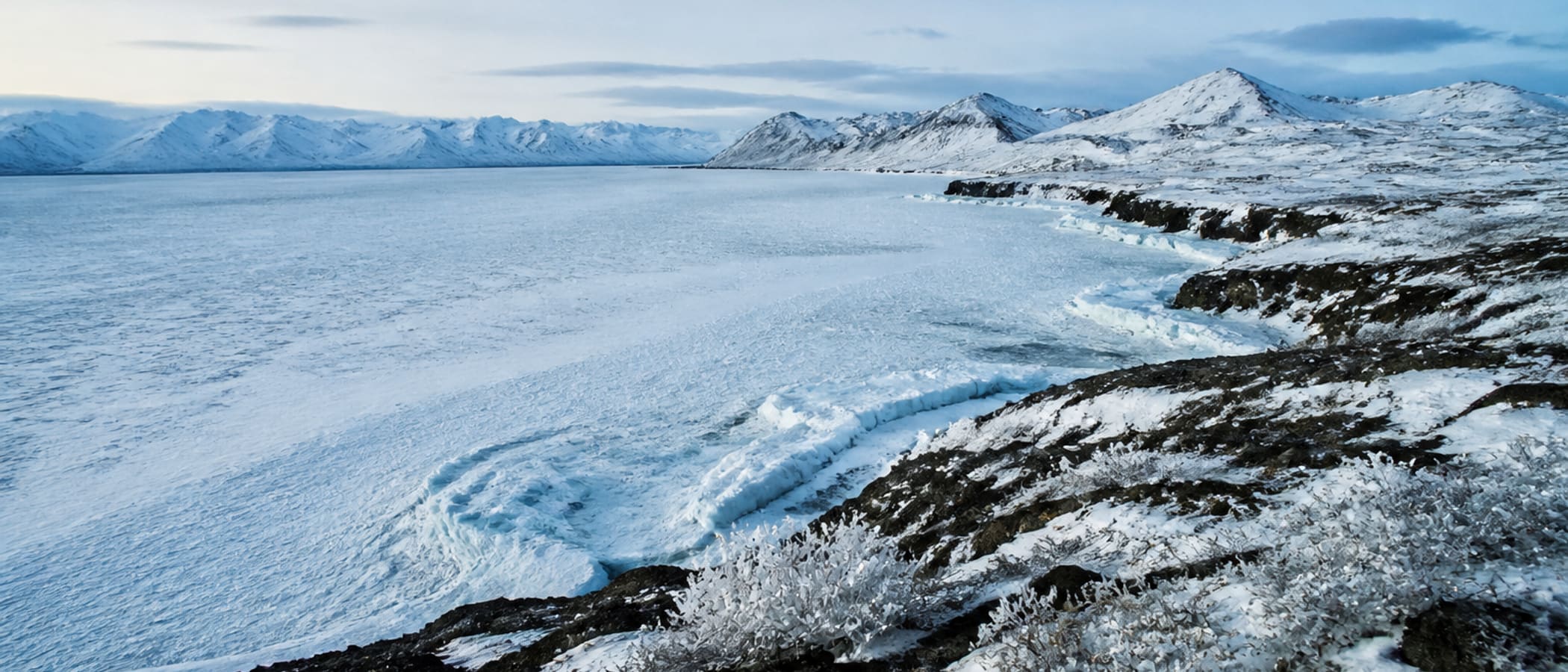
Arctic and deep-cold environments punish moisture and wind. Insulation and sweat management decide whether fire is a tool—or a fantasy.
Treeless tundra edge, −20°C, wind rising, daylight short, deep snow, lighter failed.
Mejor primer paso:Stop sweating—vent layers. Dig a terrain snow shelter with a vent, insulate the floor, then attempt percussion fire only if tinder and a spark pair exist; otherwise prioritize signals and movement toward timber or help.
Hand-drill in arctic cold is usually wasted life energy. Shelter first.
Long cold, high wind chill, limited daylight in polar winter. Snow and ice dominate materials. Liquid water means fuel. Wood may be absent; animal fats and scarce shrubs matter. Whiteout and flat light erase terrain cues.
Toca una prioridad para centrarte en ella.
Snow trench or quinzee-style digs beat open bivouacs. Floor insulation is non-negotiable. Ventilate.
Métodos más adecuados: terrain-shelter
Cold narrows thinking to the next warm minute. Use checklists: vent, shelter, fuel, signal. Buddy checks for white patches on skin. Hope is a scheduled brew and a visible signal panel—not silent endurance marches into wind.
Percussion if spark and tinder exist; friction wood is often avoid. Conserve any fuel for meltwater and warmth spikes.
Métodos más adecuados: percussion
Melt and warm—do not chew ice. Boil when contamination is a concern. Solar stills are avoid.
Métodos más adecuados: boil
Travel when visibility allows; mark routes. High-contrast rescue signals on snow. Sun methods can be poor in polar seasons.
Métodos más adecuados: signal-rescue, stop-orient
Rewarm frostbite gently; prevent refreezing. Bleeding control with insulated patients.
Métodos más adecuados: bleed-control, heat-cold, evac-decision
Fat and existing rations matter; foraging is largely avoid. Do not burn daylight on empty hunts.
Métodos más adecuados: fish-gather
Suitable dry wood pairs are scarce, hands numb, and failure freezes you wetter. Percussion with prepared tinder is the realistic primitive-adjacent path when any spark kit exists.
Insulate the floor, keep a clear vent and exit, and never burn smoky fires in a sealed chamber. Mark the entrance outside so drift does not bury you unseen.
Haz la evaluación PSR y puntúa esta habilidad con honestidad.
En esta versión los artículos de la guía están escritos en inglés. La interfaz sigue el idioma que hayas elegido.