Prioridad principal
1 Safe Water
Never drink seawater. Dig seeps above the high-tide line or follow green draws inland. Boil stream water. Solar stills remain low yield.
Métodos más adecuados: collect-seep, boil
Environment
Coasts look abundant—fish, driftwood, open sky—but salt water and tide clocks punish the unprepared. Fresh water and a dry sleep line are the real prizes.
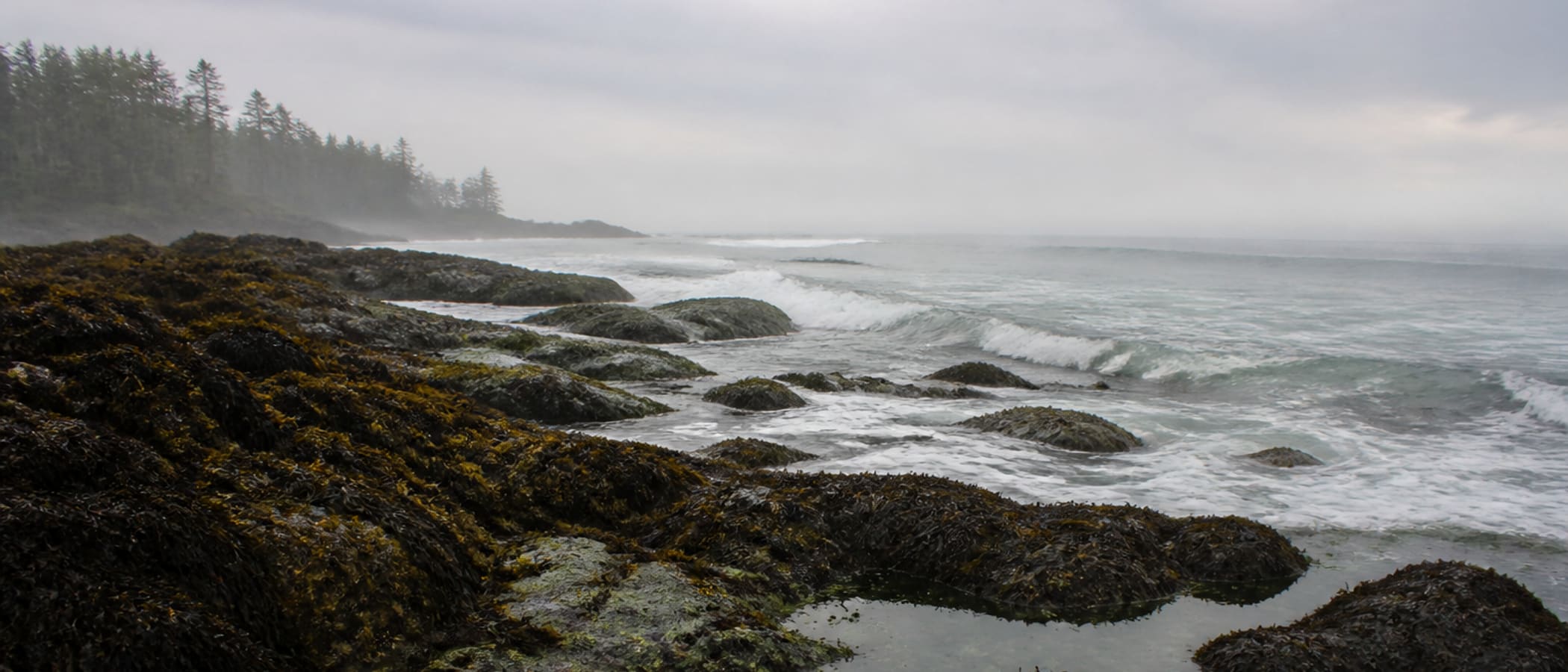
Rocky shoreline, incoming tide, empty bottle, driftwood above wrack, green draw inland.
Mejor primer paso:Move gear above the highest wrack and storm line, seek a seep or stream in the green draw (collect-seep), then build a lean-to from driftwood and start a signal fire plan on an open beach terrace.
Fishing waits until camp is tide-safe and fresh water is in hand.
Maritime weather swings with fronts: wind, spray and sudden squalls. Temperatures are milder than inland extremes but wet cold is constant. Tides reshape beaches and cut off headlands. Driftwood fuel is often plentiful above the wrack line.
Toca una prioridad para centrarte en ella.
Never drink seawater. Dig seeps above the high-tide line or follow green draws inland. Boil stream water. Solar stills remain low yield.
Métodos más adecuados: collect-seep, boil
The ocean’s rhythm is a clock—use it. Panic looks like drinking salt or racing a rising tide around a blind point. Win the high camp, win fresh water, then harvest the shore in short, planned sorties.
Camp above storm surge. Driftwood lean-tos work; watch for wind-driven rain.
Métodos más adecuados: lean-to, debris-hut
Driftwood burns hot when dry; bow-drill and percussion both fit. Keep fires off peat and away from wind-driven wildfire risk.
Métodos más adecuados: bow-drill, percussion, fire-plow
Coastline is a perfect handrail. Signal on open sand or rock shelves with contrast. Note tide times before rounding points.
Métodos más adecuados: stop-orient, signal-rescue, sun-star
Hand-line and tide-pool gathering with strict ID beat mystery seaweed binges. Cook thoroughly.
Métodos más adecuados: fish-gather, insect-small
Clean salt-contaminated cuts with fresh water when possible; watch hypothermia after immersion.
Métodos más adecuados: bleed-control, heat-cold
No. Salt load worsens dehydration. Focus on seeps, rain catch and inland streams. Distillation only works with real gear and fuel you can afford.
Above the highest recent wrack and storm debris line, out of cliff-fall and surge channels, with a clear escape inland. Beautiful tide pools are often death traps at the wrong hour.
Haz la evaluación PSR y puntúa esta habilidad con honestidad.
En esta versión los artículos de la guía están escritos en inglés. La interfaz sigue el idioma que hayas elegido.