Prioridad principal
1 Primitive Shelter
Debris and lean-tos thrive here. Prioritize thickness and ground insulation over architecture.
Métodos más adecuados: debris-hut, lean-to
Environment
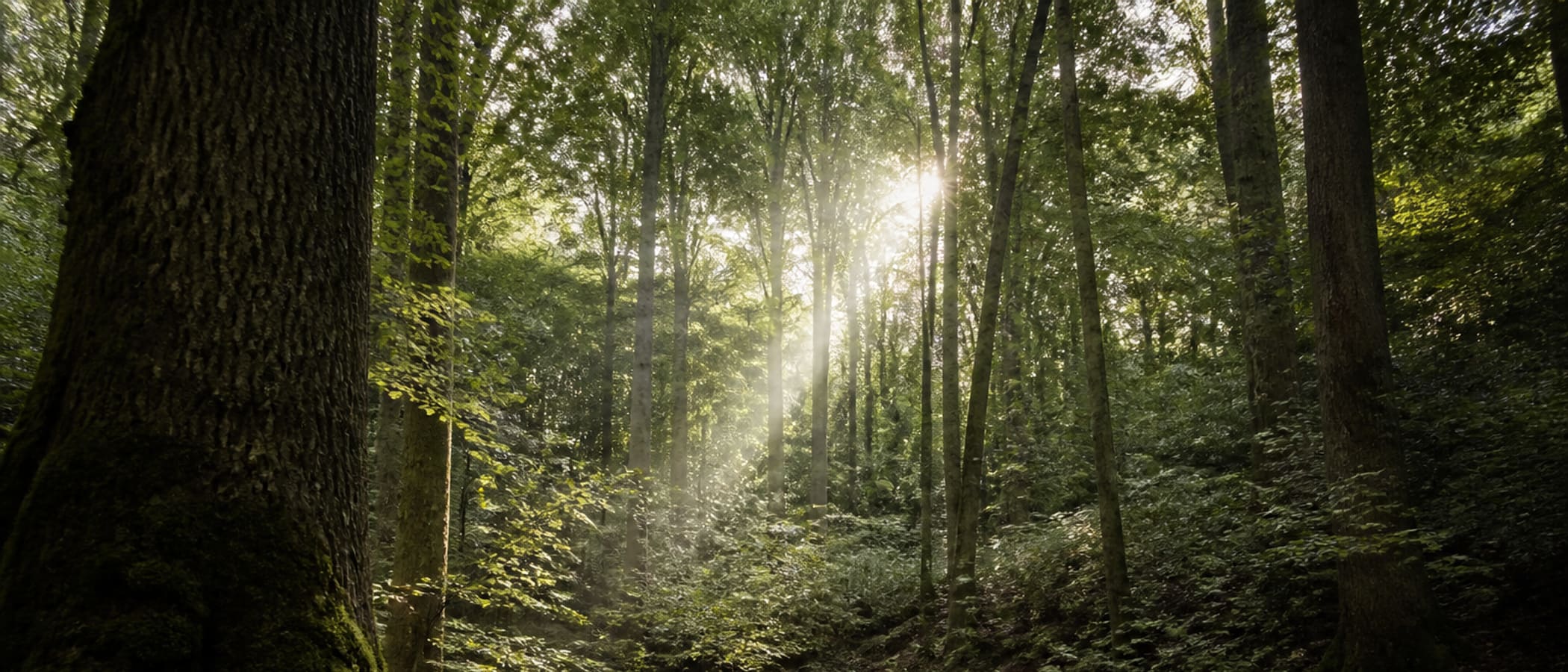
Forest is the default classroom for primitive skills: wood, cordage fibre and water are usually present—wet wood and getting lost in lookalike ridges are how it punishes you.
Mixed hardwood forest after rain, two hours to dark, jacket damp, faint creek downhill.
Mejor primer paso:Site a debris hut on high ground, strip wet outer layers under cover, then build a bow-drill fire from standing deadwood while water settles for boiling.
Do not roam for the “perfect” clearing. Materials within a short radius beat a scenic but late camp.
Temperate forests cycle through damp springs, humid summers and cold snaps. Canopy cuts wind but holds humidity; deadfall and leaf litter are abundant. Seasonal creeks may dry; ridges and valleys repeat until a compass or handrail keeps you honest.
Toca una prioridad para centrarte en ella.
Debris and lean-tos thrive here. Prioritize thickness and ground insulation over architecture.
Métodos más adecuados: debris-hut, lean-to
Forest anxiety is “everything looks the same.” Counter it with named features, timed legs and the discipline to reverse to the last known junction. Busywork chopping kills more trips than quiet, correct shelter work.
Bow-drill is the workhorse; percussion if steel exists. Hunt dry standing deadwood under canopy drip lines.
Métodos más adecuados: bow-drill, percussion
Creeks and seeps are common—always treat. Boil when fuel is plentiful.
Métodos más adecuados: collect-seep, boil
Use ridges and streams as handrails; sun methods struggle under canopy.
Métodos más adecuados: stop-orient, signal-rescue
Forage conservatively; traps and hand lines near camp beat long hunts.
Métodos más adecuados: fish-gather, trap-mindset, insect-small
Blisters, sprains and bleeding from tools are the common calls.
Métodos más adecuados: bleed-control, evac-decision
Surface wood is wet. Split standing deadwood for dry interiors, build a raised platform, and prep fine tinder before friction. Bow-drill beats desperate hand-drill on damp powder.
Only if dry, stable and free of animals. Many rock overhangs drip and conduct cold. A debris hut you control often beats a romantic wet cave.
Haz la evaluación PSR y puntúa esta habilidad con honestidad.
En esta versión los artículos de la guía están escritos en inglés. La interfaz sigue el idioma que hayas elegido.