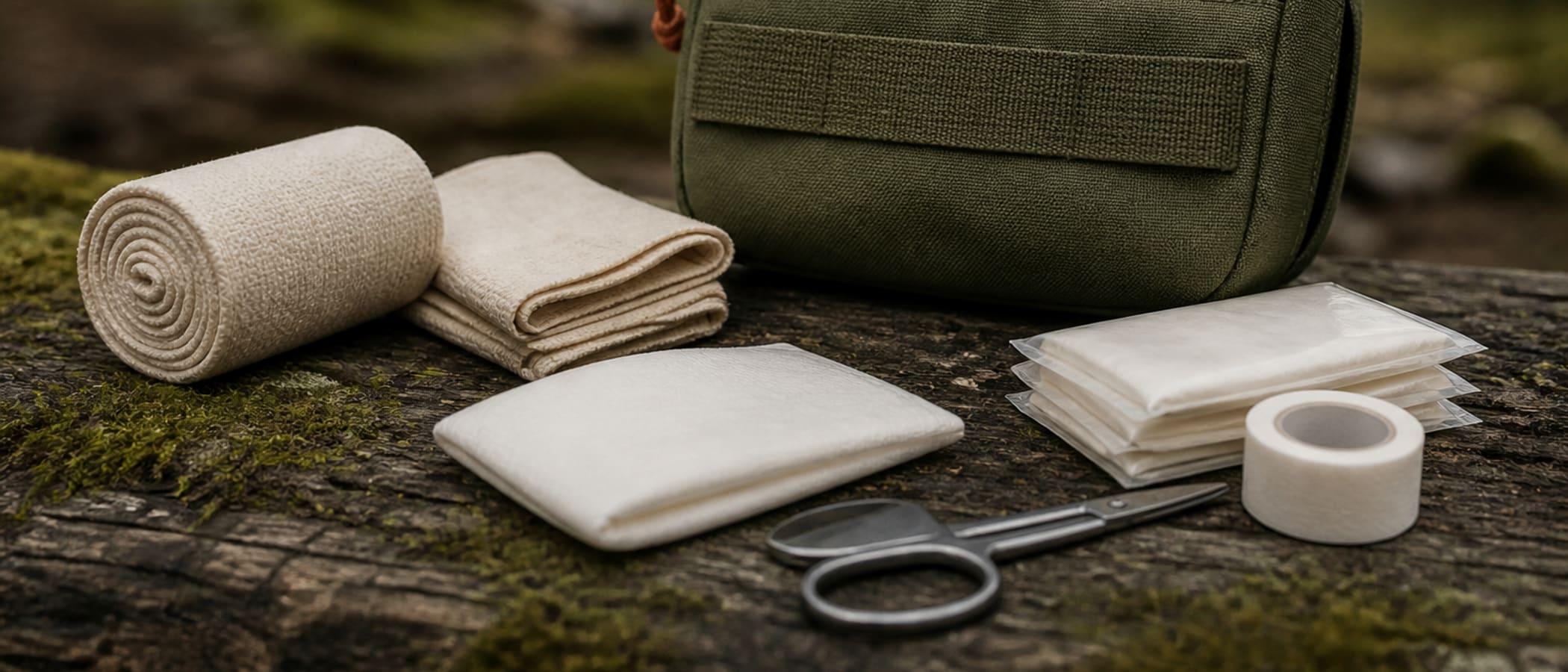
Field first-aid bandage and cloth wrap laid on mossy wood

Skill pillar

Field First Aid

Injuries turn survivable trips into emergencies. First aid skill is calm triage: life threats first, then stabilise, then plan evacuation.

2 min di lettura3 metodi

Orientati
Mostra le note di sicurezza

Scenario

Remote trail; partner with deep calf laceration; two hours to trailhead.

Prima mossa migliore:

Direct pressure and packing beat clever herbal folklore. Then decide: can they walk with help, or do you need to signal for rescue?

Perché conta

The PSR calculator treats first aid as a gating skill—because a broken ankle or heat stroke ends self-rescue fast.

Scegli

Tocca un metodo per impararlo, uno alla volta.

Filtra per regione

Tocca un bioma per riordinare i metodi in base all'idoneità. Tutti i metodi restano visibili per i lettori e per i motori di ricerca.

Confronto rapido

Impara

Impara questo metodo

Bleeding control

Direct pressure remains the core of field haemorrhage control across military and wilderness medicine.

In sintesi

Investimento di energiaEnergia bassaTechnique and materials matter more than strength.
AffidabilitàAffidabilità alta
TempoImmediate action

Materiali

  • Clean cloth
  • Improvised bandage
  • Tourniquet only if trained and indicated

Passaggi

  1. 1Expose the wound; apply firm direct pressure.
  2. 2Add dressing; do not peek repeatedly.
  3. 3Elevate if practical; treat for shock (warmth, calm, lying down).
  4. 4Use tourniquet only for life-threatening limb bleeds you cannot control otherwise—and note the time.

Errori comuni

  • Removing pressure to “check” too often
  • Tourniquet used casually for minor bleeds
  • Ignoring shock

Idoneità per regione

Migliore in: Foresta temperata, Giungla tropicale, Deserto, Montagne, Neve e ghiaccio, Costa e palude

  • Foresta temperataBuona idoneità
  • Giungla tropicaleBuona idoneità
  • DesertoBuona idoneità
  • MontagneBuona idoneità
  • Neve e ghiaccioBuona idoneità
  • Costa e paludeBuona idoneità

Legenda dell'idoneitàBuona idoneitàScarsa idoneitàDa evitare

Altri metodi

Heat illness & hypothermia Energia media · Affidabilità alta

Environmental injury management is older than modern medicine—shade, water, insulation and gradual rewarming.

Materiali

  • Shade or insulation
  • Water
  • Dry layers
  • Sweet fluids if conscious

Passaggi

  1. Heat: stop activity, shade, cool skin, sip water if alert.
  2. Heat stroke signs (confusion, hot skin)—cool aggressively and evacuate.
  3. Cold: replace wet layers, insulate from ground, warm sweet drinks if conscious.
  4. Never rub frostbitten tissue with snow; protect and evacuate.

Investimento di energia

Energia media. Prevention (pace, layers) costs less than rescue.

Idoneità per regione

Migliore in: Foresta temperata, Giungla tropicale, Deserto, Montagne, Neve e ghiaccio, Costa e palude

Errori comuni

  • Pushing through early heat cramps
  • Alcohol “to warm up”
  • Rewarming too fast after severe hypothermia without support
Stay or evacuate Energia media · Affidabilità media

Lost-person and wilderness medicine both emphasise decision points: self-rescue vs signalling for help.

Materiali

  • Map/awareness
  • Signal tools
  • Honest assessment of injuries

Passaggi

  1. List life threats and mobility limits.
  2. Estimate time/distance to help vs risk of moving.
  3. If staying: improve shelter, water, signals.
  4. If moving: short stages, mark route, rest before exhaustion.

Investimento di energia

Energia media. Bad marches destroy remaining reserves.

Idoneità per regione

Migliore in: Foresta temperata, Giungla tropicale, Deserto, Montagne, Neve e ghiaccio, Costa e palude

Errori comuni

  • Pride delaying a call for help
  • Night travel without need
  • Splitting the party carelessly
Valuta

Scala di abilità

Autovalutazione onesta con gli stessi livelli del calcolatore.

  1. Nessuna

    No first-aid training; freezes or makes unsafe interventions.

  2. Base

    Can manage cuts, pressure dressings and call for help.

  3. Competente

    Wilderness first aid certified; handles environmental illness and evacuation planning.

  4. Esperto

    Advanced wilderness medicine experience; leads team medical decisions under stress.

Domande frequenti

Should I drink alcohol for cold?

No. It increases heat loss and impairs judgement.

When do I use a tourniquet?

Only for life-threatening limb bleeding you cannot control with pressure—and only if you know how. Note the time and seek emergency care.

Valutati

Fai la valutazione PSR e assegna un punteggio onesto a questa abilità.

In questa versione gli articoli della guida sono scritti in inglese. L'interfaccia segue la lingua che hai impostato.