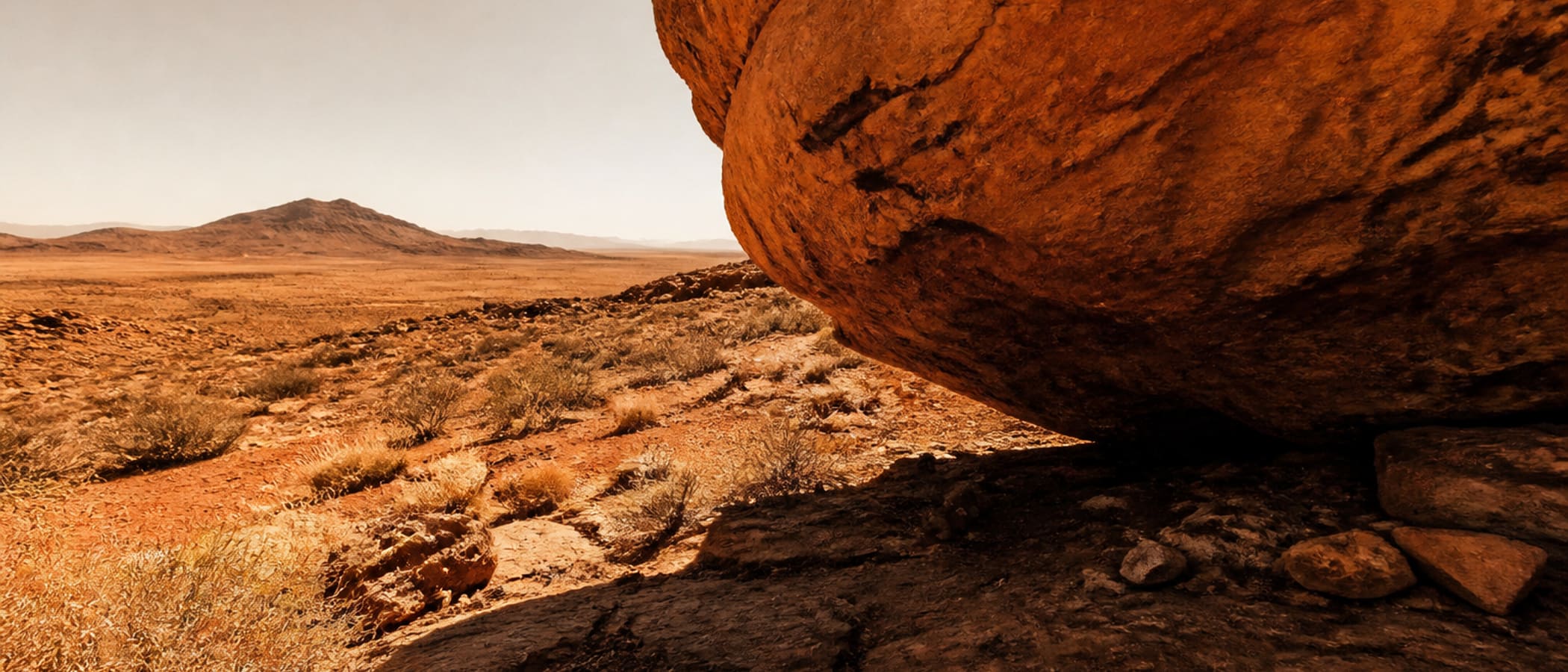
Deserts punish haste. The efficient survivor moves in cool hours, hides from the sun, and treats every drop of water as irreplaceable fuel for the brain.
2 min read
1Orient
Show safety notes
Scenario
Late morning in arid scrub; one litre left; dry wash visible a kilometre downhill; no shade on the ridge.
Best first move:Get off the ridge into shade, ration sweat not just water, then dig a seep in the outside bend of the wash after the heat peaks.
Do not burn a solar still all afternoon hoping for tablespoons while you cook on the ridge. Shade and a seep beat theatre.
Climate details
Hot deserts swing from extreme daytime heat to surprisingly cold nights. Aridity means sweat does not cool you as well as you expect, and wood for fire or boiling is often scarce. Some deserts are high-altitude cold deserts—same water rules, different clothing logic.
Show core threats
Dehydration and heat stroke during midday travel
Hypothermia after sunset in light clothing
Getting lost on featureless flats or dune seas
Flash floods in dry washes after distant storms
Spines, venomous animals, and soft sand travel cost
2Choose
Tap a priority to focus on it.
Priority order
3Learn
Focus priority
1 Safe Water
Water is the desert’s scarce currency. Dig seeps in washes and at vegetation lines before investing in low-yield stills. Boiling needs scarce fuel—prefer clean-looking seeps filtered then boiled only if you can afford the wood.
Desert survival is pacing and humility. The urge to “just reach that next ridge” in full sun is how people collapse. Schedule work for cool hours, celebrate small shade wins, and treat panic thirst with shade-first discipline before gulping the last bottle.
2. Primitive Shelter
Midday shelter means shade and ground insulation from hot sand. Night shelter means wind block and layers. Natural overhangs and trench-with-tarp shade beat heavy debris huts you cannot build without vegetation.
Best-fit methods: terrain-shelter, lean-to
3. Primal Fire
Dry desert plants (yucca, sotol, sagebrush depending on region) favour hand drill and bow drill. Bamboo saw methods fail. Percussion wins if you have steel and char. Never waste calories on friction with green wood.
Open sky helps sun orientation; mirages and dune sameness deceive. Travel dawn/dusk; rest midday. Signal from ridgelines with mirror and contrast panels.
Dry air and clear skies dump heat rapidly after sunset. Sweat-soaked clothes become a hypothermia risk. Dry off and insulate before you shiver.
Are solar stills worth it?
As a teaching tool and last resort, sometimes. As a primary water plan, rarely—the yield is usually tiny compared with a good seep or carried water.
Which fire method fits desert best?
Hand drill and bow drill with dry desert fibres/woods, or percussion if you have steel and char. Fire plow and bamboo saw are usually the wrong energy bet.
Rate yourself
Take the PSR assessment and score this skill honestly.