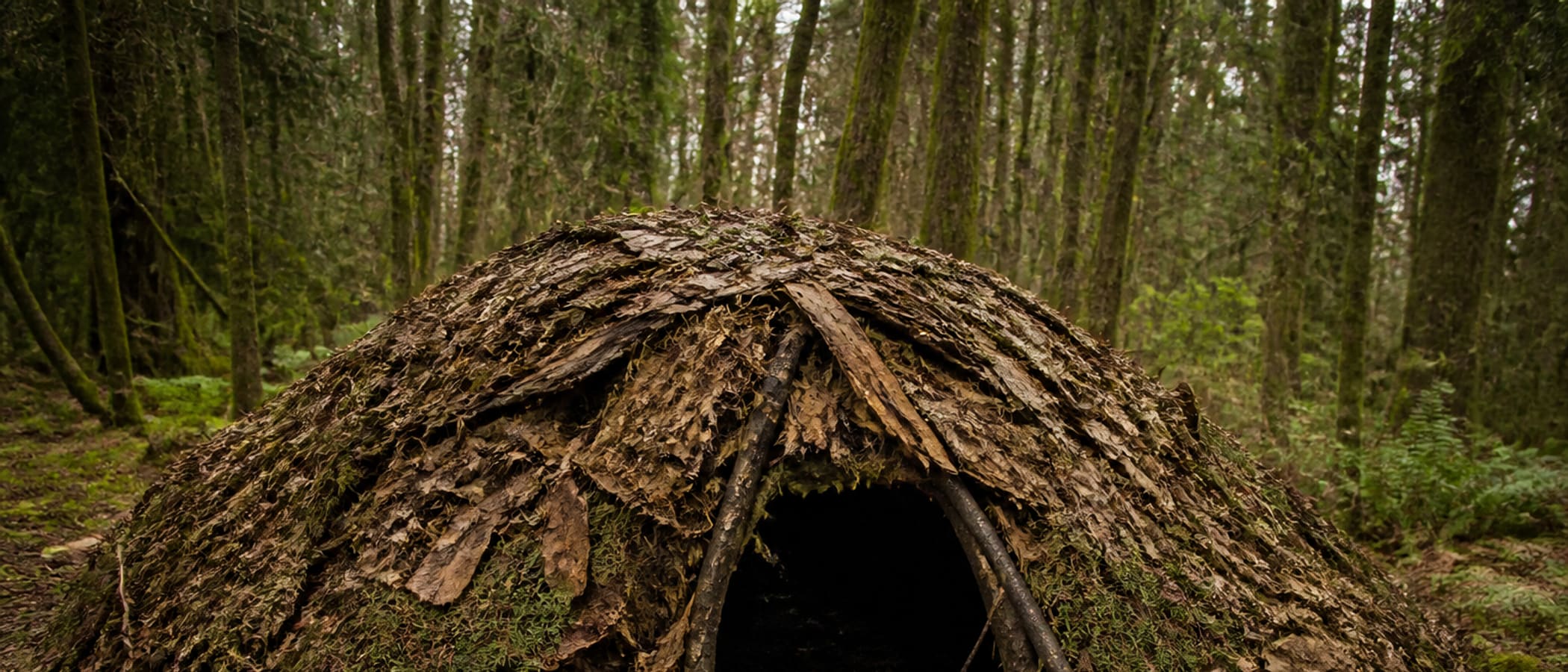
Primitive debris hut of leaves and branches in a woodland clearing

Skill pillar

Primitive Shelter

Exposure kills faster than hunger. Shelter is about trapping still air, shedding water and blocking wind—not building a cabin.

2 min read3 methods

Orient
Show safety notes

Scenario

Temperate forest at dusk; temperature dropping; light rain starting.

Best first move:

A tight debris hut with a thick roof beats a pretty lean-to that leaks. Site selection first—then pile insulation.

Why it matters

Under the Rule of Threes, shelter and fire share top urgency. A bad night of heat loss ruins tomorrow’s water and travel decisions.

Choose

Tap a method to learn it — one at a time.

Filter by region

Tap a biome to re-order methods by fit. All methods stay visible for readers and search engines.

Compare at a glance

Learn

Learn this method

Debris hut

A classic temperate woodland shelter: a ridge frame stuffed and thatched with leaves until walls and roof hold a still-air layer.

At a glance

Energy investmentHigh energyGathering enough debris is exhausting—start before dark.
ReliabilityHigh reliability
Time1–3 hours for a livable hut

Materials

  • Ridge pole and rib sticks
  • Armfuls of leaves, ferns or pine needles
  • Optional reflective emergency blanket as inner liner

Steps

  1. 1Pick high, dry ground away from deadfall and drainages.
  2. 2Prop a ridge pole on a stump or fork; add rib sticks like a ribcage.
  3. 3Pile debris at least arm-deep over the frame; leave a small door.
  4. 4Stuff the floor with dry bedding thicker than you think you need.
  5. 5Block the door with a debris plug once inside.

Common mistakes

  • Too thin a roof—rain soaks bedding
  • Built in a depression that floods
  • Oversized interior that will not warm with body heat

Region fit

Best in: Temperate forest, Mountains · Poor in: Tropical jungle, Desert, Coast & swamp · Avoid in: Snow & ice

  • Temperate forestGood fit
  • Tropical junglePoor fit
  • DesertPoor fit
  • MountainsGood fit
  • Snow & iceAvoid
  • Coast & swampPoor fit

Fit keyGood fitPoor fitAvoid

Other methods

Lean-to Medium energy · Medium reliability

Fast wind-break used worldwide: a sloping roof against a ridge or cliff, often paired with a long fire.

Materials

  • Ridge and rafters
  • Boughs or tarp
  • Reflector logs for fire

Steps

  1. Orient the open side away from prevailing wind and weather.
  2. Lash or prop a ridge; lean rafters; thatch thickly.
  3. Build a long fire parallel to the opening with a reflector wall opposite.
  4. Raise bedding off damp ground.

Energy investment

Medium energy. Faster than a hut but needs more firewood overnight.

Region fit

Best in: Temperate forest, Desert, Mountains, Coast & swamp · Poor in: Tropical jungle, Snow & ice

Common mistakes

  • Wind shifts into the open face
  • Thin thatch drips on bedding
  • Fire too close—sparks on roof
Terrain / natural shelter Low energy · Medium reliability

Using caves, rock overhangs, root wells and snow trenches—often the lowest calorie option when geology cooperates.

Materials

  • Site assessment
  • Bedding
  • Optional wind wall of packs or brush

Steps

  1. Scan for overhangs, dense thickets or snow drifts on the lee side.
  2. Check for animal sign, rockfall and rising water.
  3. Improve with a wind wall and thick ground insulation.
  4. Mark the site so you can find it in dark or whiteout.

Energy investment

Low energy. Finding beats building—if the site is safe.

Region fit

Best in: Temperate forest, Tropical jungle, Desert, Mountains, Snow & ice, Coast & swamp

Common mistakes

  • Flash-flood washes and tide lines
  • Unstable snow roofs
  • Sharing space with animals
Rate

Skill ladder

Honest self-check using the same levels as the calculator.

  1. None

    Cannot improvise weather protection beyond a tent you already have.

  2. Basic

    Can rig a tarp or simple lean-to with cordage.

  3. Proficient

    Can build an insulated debris shelter and site it wisely in temperate woods.

  4. Expert

    Matches shelter type to biome and weather; manages heat, moisture and safety overnight.

FAQ

Should I sleep in a cave?

Only after checking for animals, rockfall, flooding and bad air. Improve the entrance windbreak and keep bedding dry.

How big should a debris hut be?

Barely larger than your body. Small spaces warm with body heat; cathedral ceilings waste warmth.

Rate yourself

Take the PSR assessment and score this skill honestly.

Guide articles are written in English in this version. UI chrome follows your language setting.