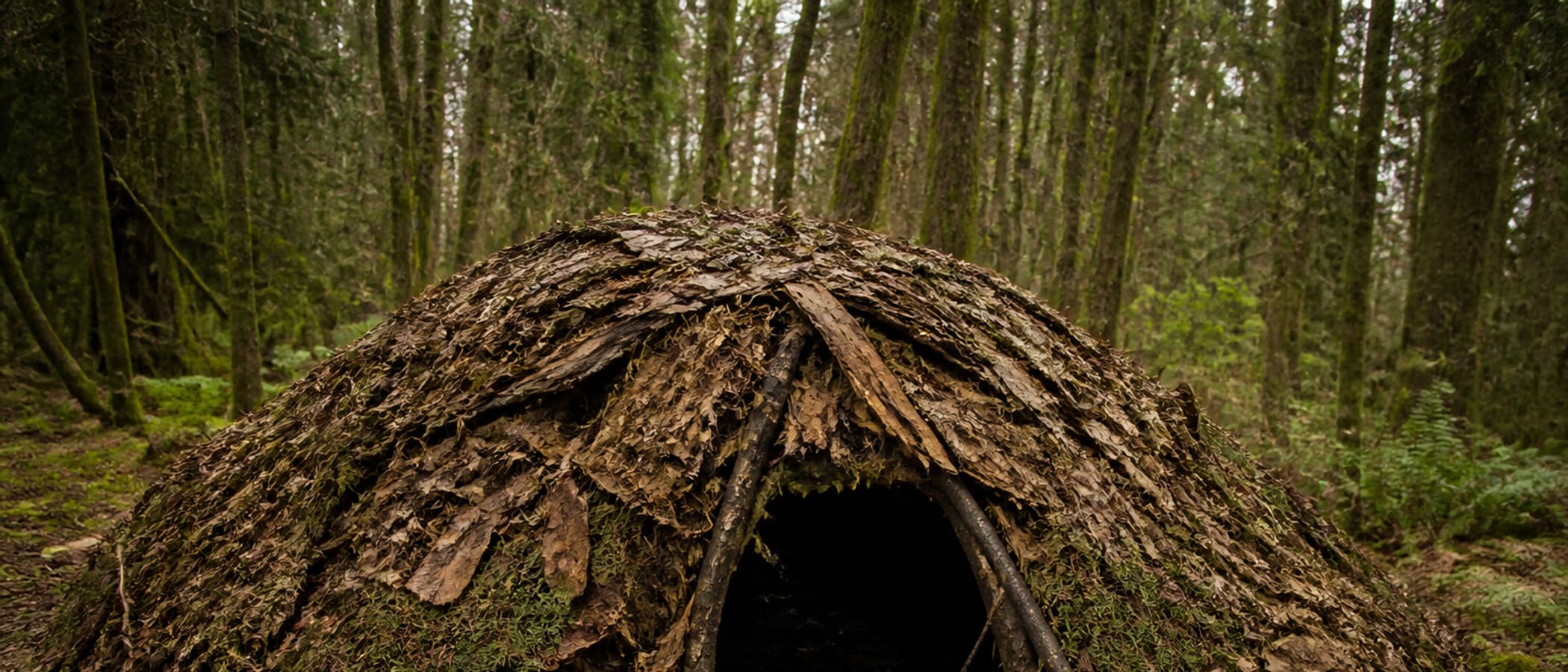
Primitive Shelter
Terrain / natural shelter
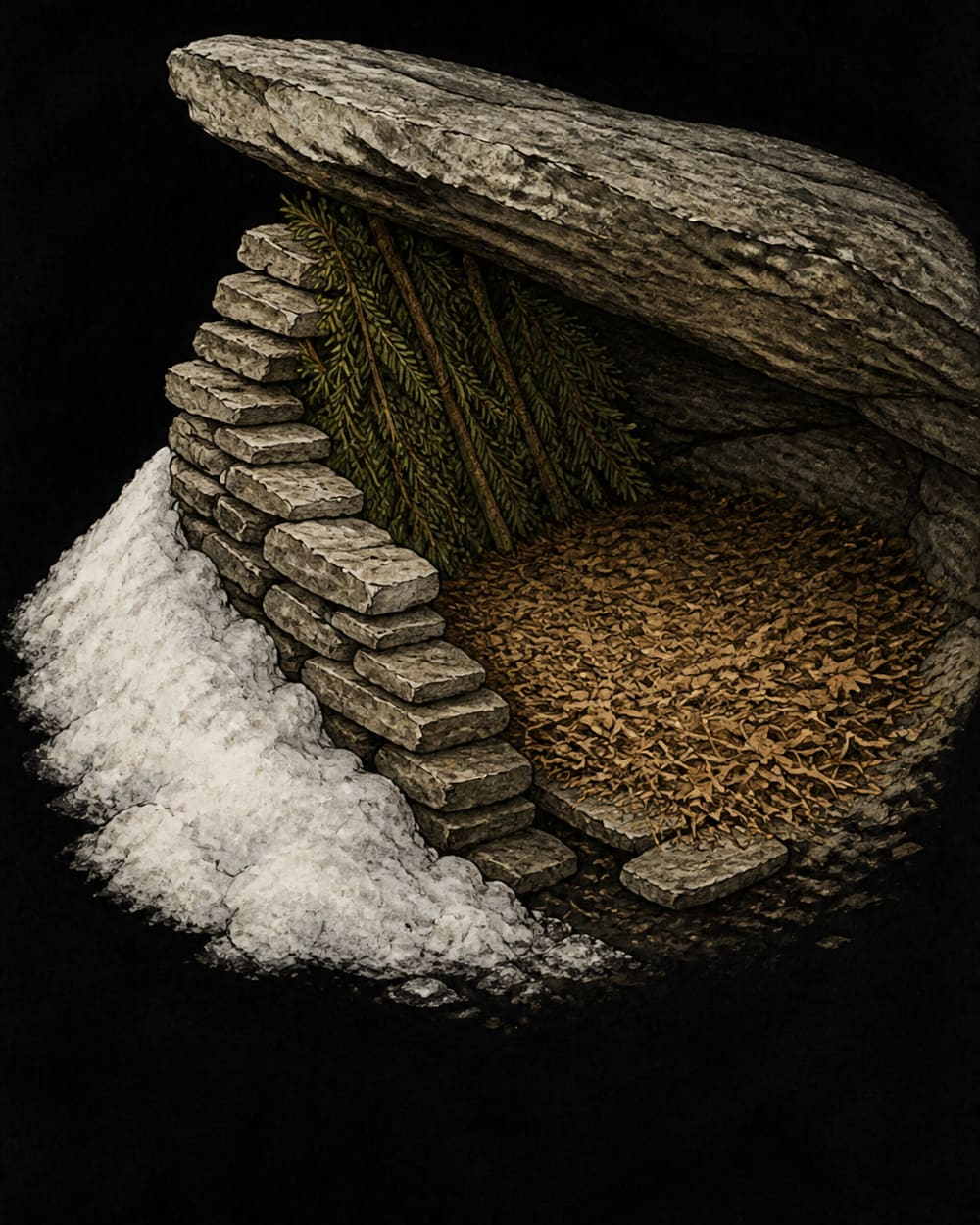
Using caves, rock overhangs, root wells and snow trenches—often the lowest calorie option when geology cooperates.
At a glance
Energy investmentLow energyFinding beats building—if the site is safe.
ReliabilityMedium reliability
TimeMinutes to an hour
Materials
- Site assessment
- Bedding
- Optional wind wall of packs or brush
Steps
- 1Scan for overhangs, dense thickets or snow drifts on the lee side.
- 2Check for animal sign, rockfall and rising water.
- 3Improve with a wind wall and thick ground insulation.
- 4In snow, poke a vent hole and never burn a flame inside a sealed shelter—carbon monoxide builds without warning.
- 5Mark the site so you can find it in dark or whiteout.
- Flash-flood washes and tide lines
- Unstable snow roofs
- Sharing space with animals
- Sheltering under an overhang or in a shallow cave during a lightning storm
Other methods
Rate yourself
Take the PSR assessment and score this skill honestly.