Skill pillar
Primitive Shelter
Exposure kills faster than hunger. Shelter is about trapping still air, shedding water and blocking wind—not building a cabin.
Scenario
Temperate forest at dusk; temperature dropping; light rain starting.
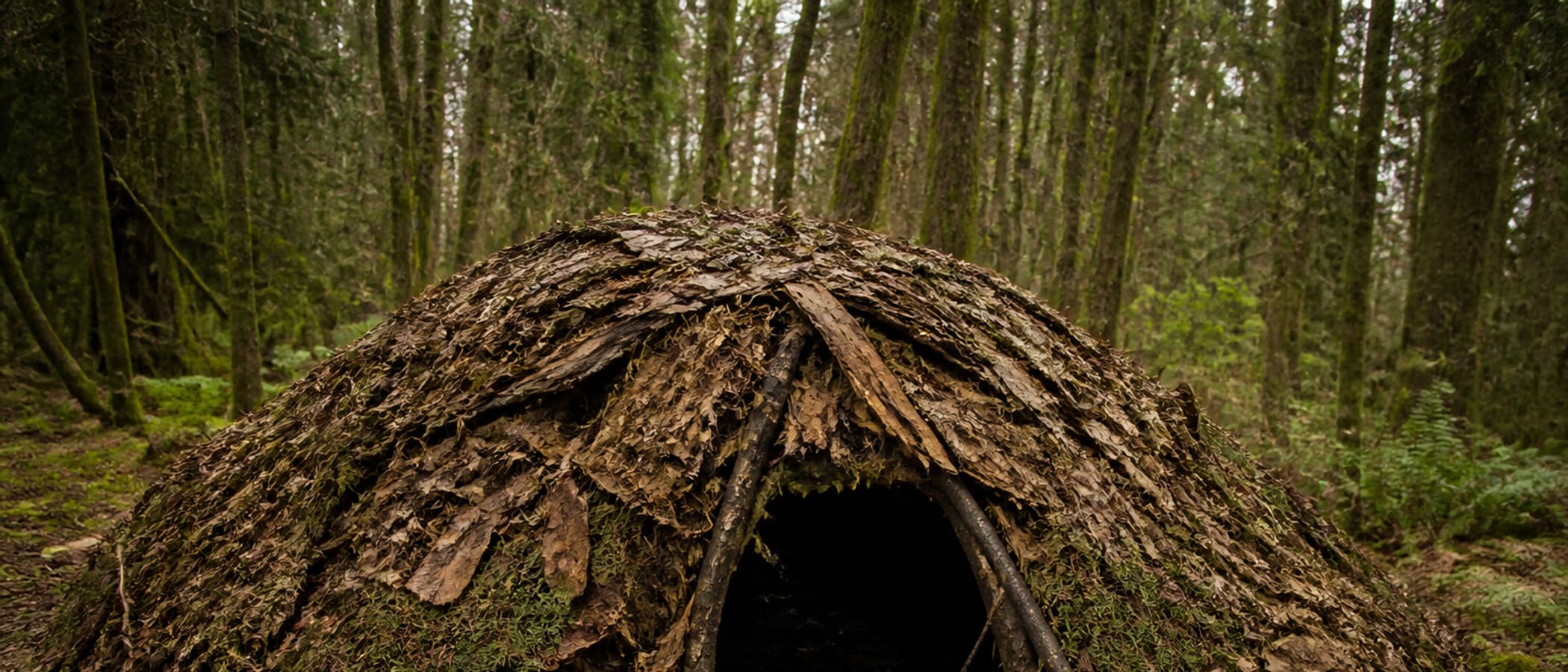
Best first move: Debris hut
A tight debris hut with a thick roof beats a pretty lean-to that leaks. Site selection first—then pile insulation.
Why it matters
Under the Rule of Threes, shelter and fire share top urgency. A bad night of heat loss ruins tomorrow’s water and travel decisions.
Compare the methods, then open the one that fits your ground.
Filter by region
Tap a biome to re-order methods by fit. All methods stay visible for readers and search engines.
Compare at a glance
Open a method for its materials, numbered steps, common mistakes and biome fit.
Debris hutSkill ladder
Honest self-check using the same levels as the calculator.
None
Cannot improvise weather protection beyond a tent you already have.
Basic
Can rig a tarp or simple lean-to with cordage.
Proficient
Can build an insulated debris shelter and site it wisely in temperate woods.
Expert
Matches shelter type to biome and weather; manages heat, moisture and safety overnight.
FAQ
Should I sleep in a cave?
Only after checking for animals, rockfall, flooding and bad air. Improve the entrance windbreak and keep bedding dry.
How big should a debris hut be?
Barely larger than your body. Small spaces warm with body heat; cathedral ceilings waste warmth.
Rate yourself
Take the PSR assessment and score this skill honestly.