Field First Aid
Bleeding control
Direct pressure remains the core of field haemorrhage control across military and wilderness medicine.
At a glance
Energy investmentLow energyTechnique and materials matter more than strength.
ReliabilityHigh reliability
TimeImmediate action
Materials
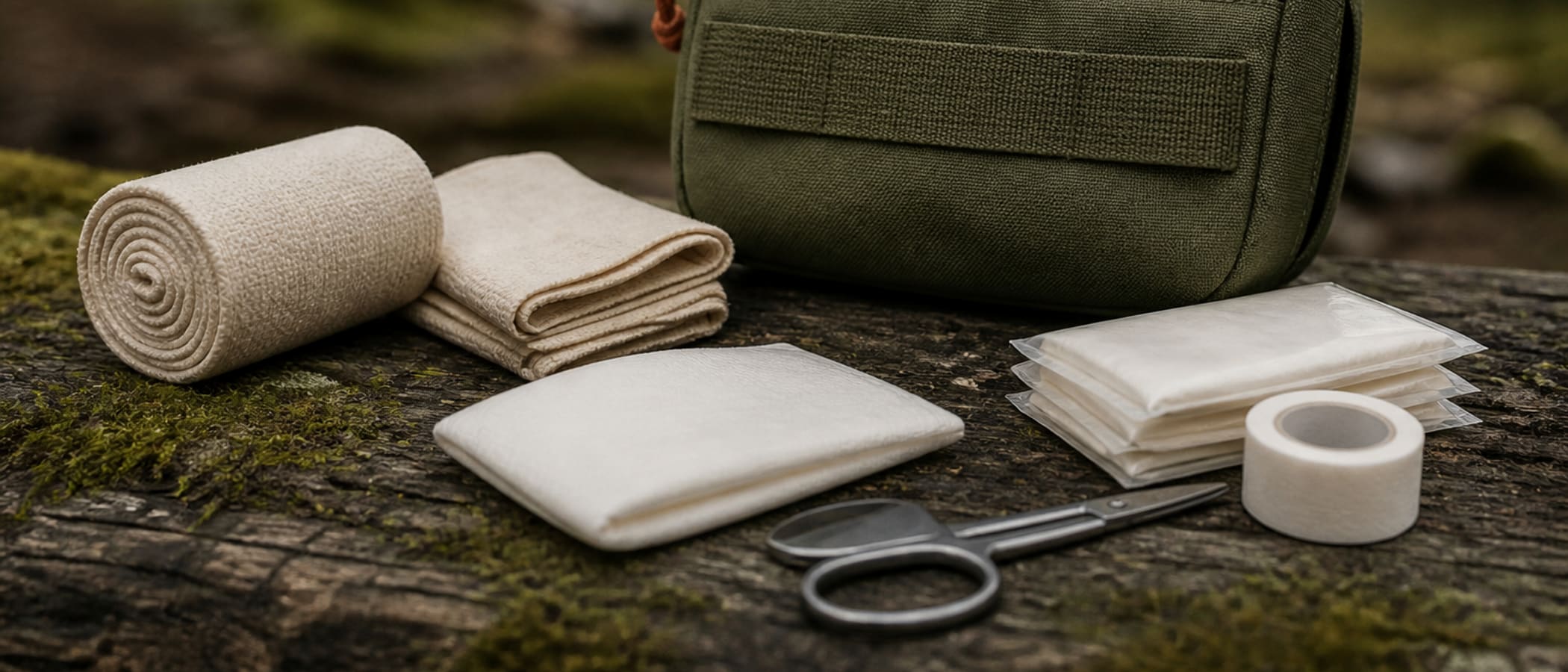
- Clean cloth
- Improvised bandage
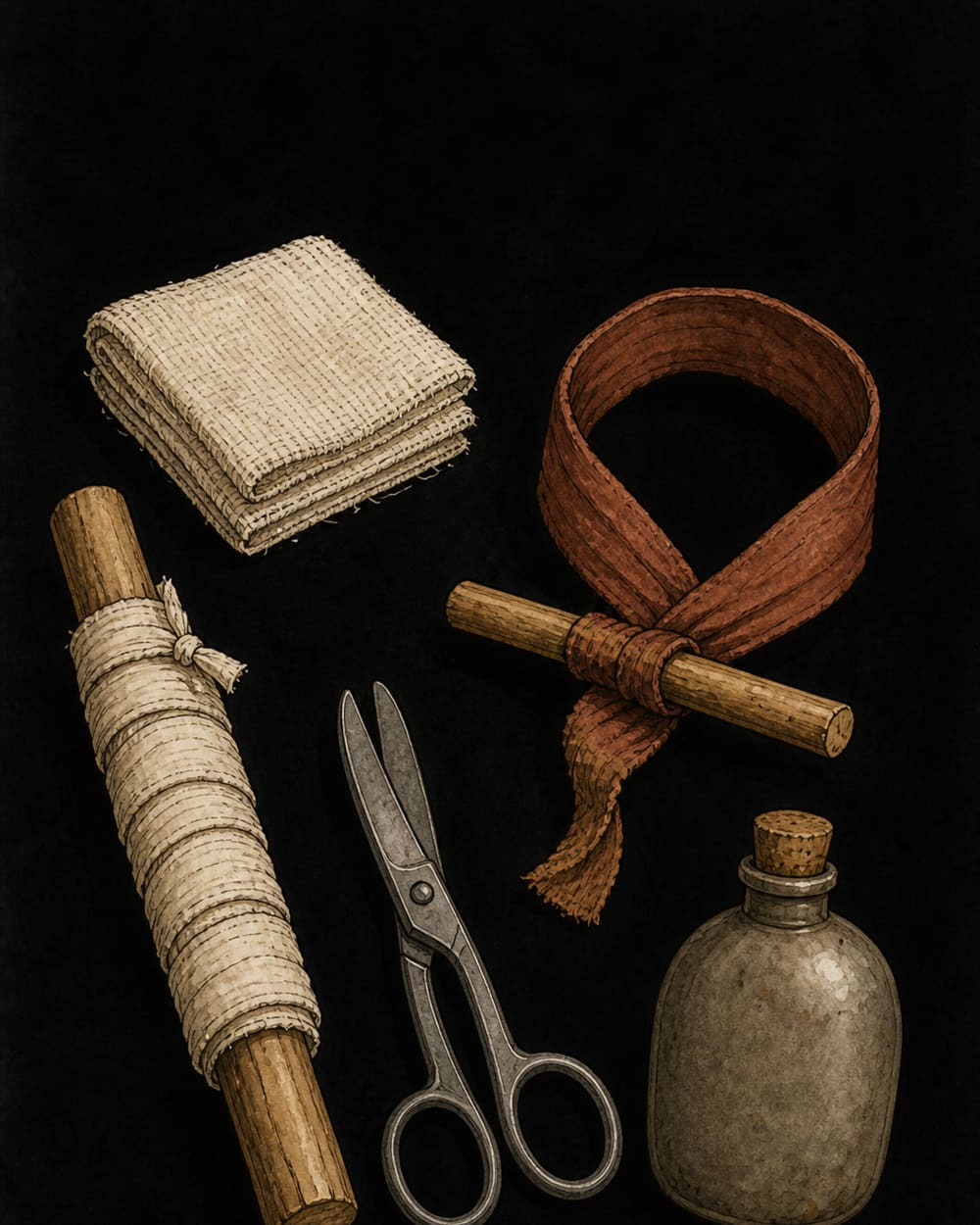
- Tourniquet only if trained and indicated
Steps
- 1Expose the wound; apply firm direct pressure.
- 2Add dressing; do not peek repeatedly.
- 3Elevate if practical; treat for shock (warmth, calm, lying down).
- 4Use tourniquet only for life-threatening limb bleeds you cannot control otherwise—and note the time.
- Removing pressure to “check” too often
- Tourniquet used casually for minor bleeds
- Ignoring shock
Other methods
Rate yourself
Take the PSR assessment and score this skill honestly.