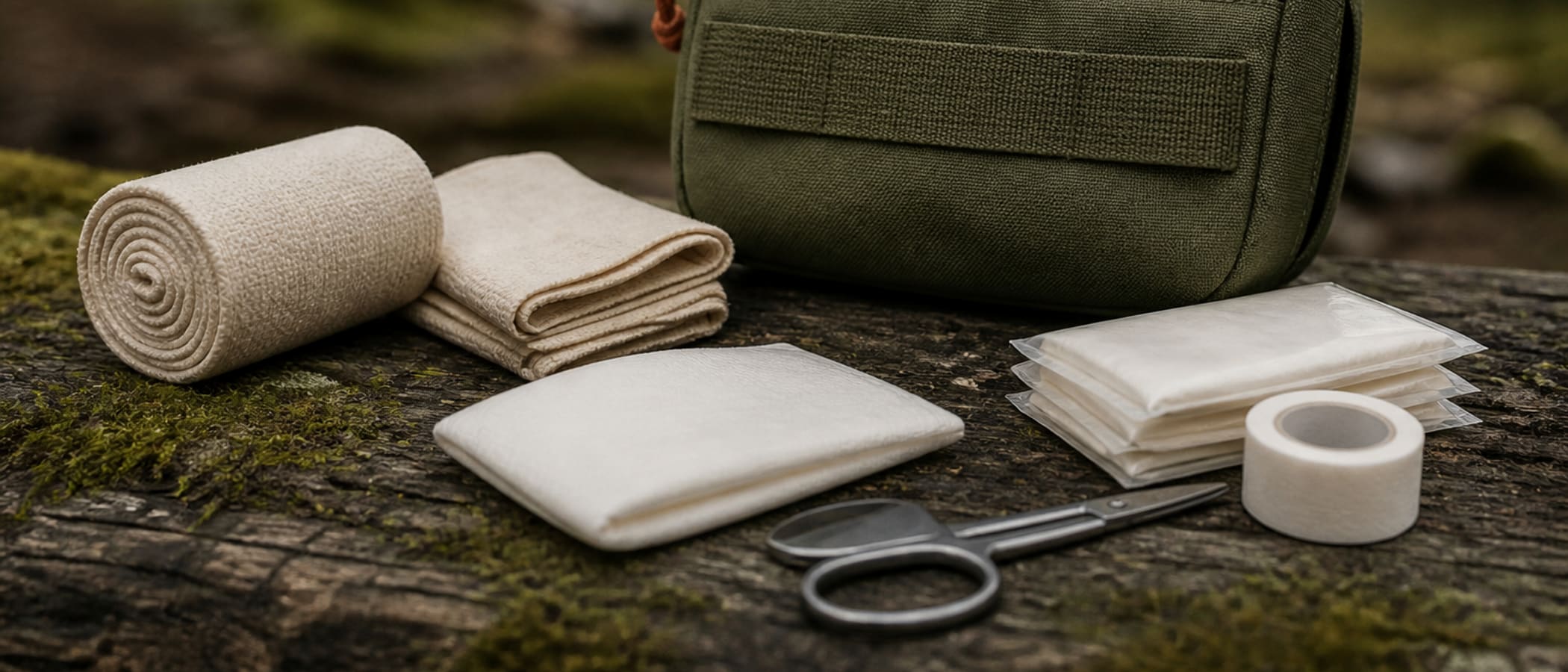
Field First Aid
Heat illness & hypothermia
Environmental injury management is older than modern medicine—shade, water, insulation and gradual rewarming.
At a glance
Energy investmentMedium energyPrevention (pace, layers) costs less than rescue.
ReliabilityHigh reliability
TimeOngoing management
Materials
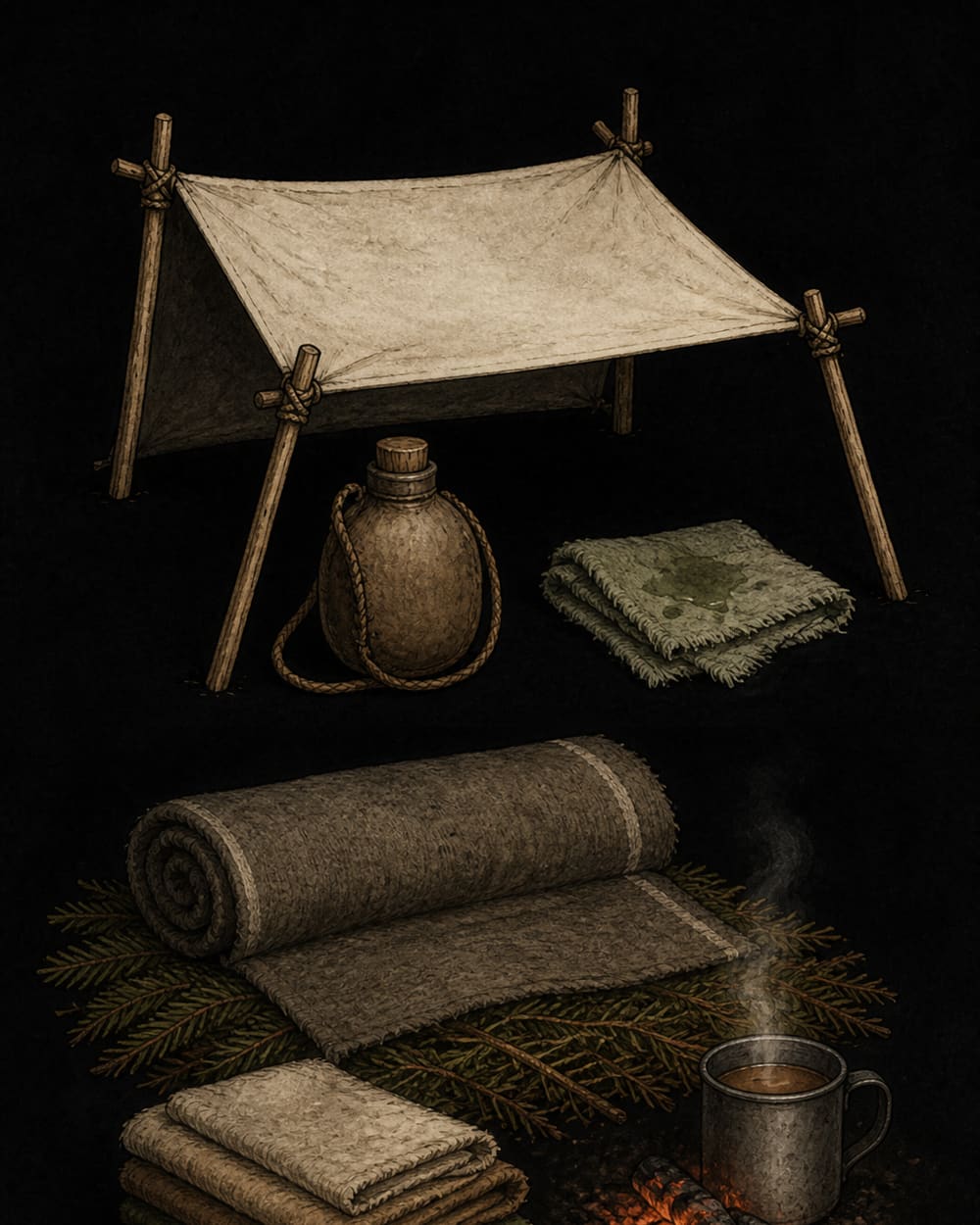
- Shade or insulation
- Water
- Dry layers
- Sweet fluids if conscious
Steps
- 1Heat: stop activity, shade, cool skin, sip water if alert.
- 2Heat stroke signs (confusion, hot skin)—cool aggressively and evacuate.
- 3Cold: replace wet layers, insulate from ground, warm sweet drinks if conscious.
- 4Never rub frostbitten tissue with snow; protect and evacuate.
- Pushing through early heat cramps
- Alcohol “to warm up”
- Rewarming too fast after severe hypothermia without support
Other methods
Rate yourself
Take the PSR assessment and score this skill honestly.